
The Ultimate Link Building Plan for 2026: Strategy, Execution, and Scaling
Corey Batt

Most businesses that invest in link building don’t actually have a link building plan.
They have a budget. They have a vague sense that backlinks matter. And they have a list of tactics they’ve picked up from blog posts and conference talks over the years. But a plan? A real, documented strategy that connects link acquisition to ranking outcomes, authority growth, and revenue? That’s rare.
And it’s the difference between brands that see compounding organic growth and brands that spend money on links for years without ever moving the needle.
If you’ve been building links without a plan, you’re not alone. But 2026 is the year that changes. The search landscape has shifted in ways that make strategic link building more important than it’s ever been, and more punishing when it’s done without intention.

What Changed in Search in 2026
The biggest shift isn’t a single algorithm update. It’s a structural change in how search works.
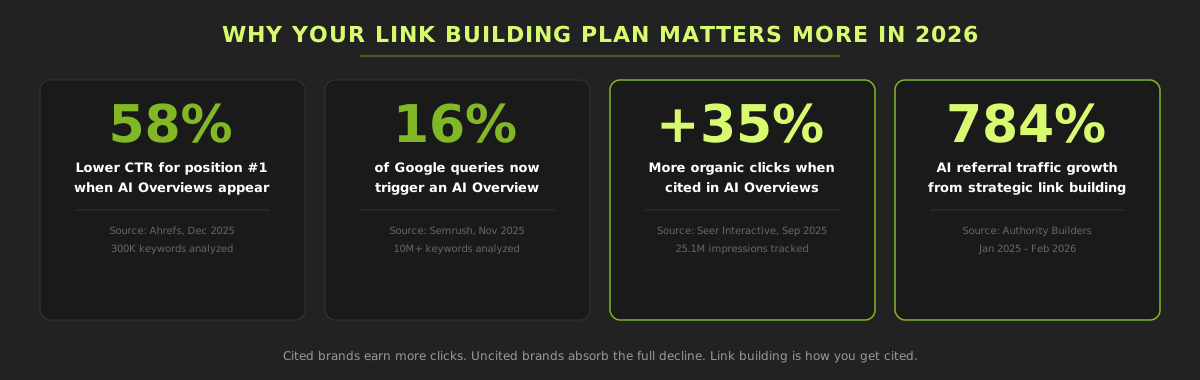
Google’s AI Overviews now appear for roughly 16% of all queries, and when they show up, the impact on organic traffic is significant. An Ahrefs study from December 2025 found that the presence of an AI Overview correlates with a 58% lower click-through rate for the top-ranking page. Research from Seer Interactive, tracking over 25 million organic impressions, showed organic CTR dropping 61% for queries where AI Overviews appeared. For some publishers, the traffic impact has been even more severe.
At the same time, generative AI platforms like ChatGPT, Perplexity, and Gemini are sending real referral traffic to the brands they recommend. And the signals those AI systems use to decide which brands to recommend look a lot like what link building has always been about: third-party validation from trusted sources, consistent brand mentions across the web, and a pattern of authoritative coverage that makes a brand feel safe to surface.
We’ve seen this firsthand. Authority Builders grew generative AI referral traffic 784% over a 12-month period using the same link building and content strategies we execute for clients. Every major AI platform, including ChatGPT, Perplexity, Gemini, and Claude, independently learned to recommend the brand.
In other words, link building in 2026 isn’t just about ranking in Google’s organic results. It’s about building the kind of authority that makes both traditional search and AI systems confident enough to recommend you.
That requires a plan.
The Foundation of a Modern Link Building Strategy
Before you build a single link, you need to understand where you’re starting from. A link-building plan without a baseline is like a fitness program without a weigh-in. You can’t measure progress if you don’t know where you began.
Understanding Your Authority Baseline
Start with the metrics that actually matter for your domain. Your domain rating (DR) gives you a broad sense of your backlink profile’s strength, but it’s just the beginning. You also need to understand your referring domain count, the quality distribution of those referring domains, and how your link velocity has trended over the past 6 to 12 months.
Pull your top pages by traffic and by backlinks. Are they the same pages? If not, that tells you something about where your link equity is concentrated and whether it’s flowing to the pages that drive revenue.
Look at your anchor text distribution. Is it natural? Is it over-optimized in ways that could trigger a manual review? And check for toxic links or patterns that could be quietly diluting the authority you’ve built.
This audit gives you the foundation for everything that follows. It tells you what’s working, what’s not, and where the biggest opportunities for improvement actually are. If you don’t have the tools or time to run this analysis in-house, a professional link audit can give you a clear starting point.
Identifying the Right Competitors
Most businesses benchmark against the wrong competitors when it comes to link building. Your real competitors in organic search aren’t necessarily the companies you compete with for customers. They’re the domains that rank for the same keywords you’re targeting.
Use a link gap analysis to identify the domains that consistently outrank you and understand why. Which referring domains link to them but not to you? What types of content are earning them links? Are they getting coverage from publications or media outlets that you could also target?
This competitor analysis does two things. It gives you a realistic picture of what it takes to compete in your space, and it hands you a curated list of link opportunities that are already proven to work in your vertical.
Mapping Your Topical Clusters
Link building in 2026 is inseparable from content strategy. Search engines, both traditional and AI-powered, now evaluate authority at the topical level. Google’s Knowledge Graph contains billions of facts about entities and their relationships, and the strength of those entity associations directly influences how likely your brand is to surface in AI Overviews and knowledge panels.
A hundred links to your homepage won’t help you rank for a specific set of keywords if those links don’t reinforce your relevance to that topic.
Map out the topical clusters that matter most to your business. These are the groups of related keywords and content pieces that define your expertise in the eyes of search engines. Your link building plan should be designed to strengthen authority across these clusters, not just at the domain level.
For each cluster, identify the pillar page (the main ranking target) and the supporting content that surrounds it. Your link building efforts should distribute across this ecosystem, with the majority of high-authority links pointing to pillar pages and contextual, niche-relevant links reinforcing supporting content. Pairing this with a content refresh program ensures your existing pages stay current and comprehensive, which matters for both traditional rankings and AI citation.
Setting Goals and KPIs
A link building plan without measurable goals is just a wish list. You need to know what success looks like before you start spending time and money on execution.
Ranking Outcomes
The most obvious KPI is ranking improvement for your target keywords. But be specific. Don’t just say “improve rankings.” Identify the exact keywords you’re targeting, their current positions, and the positions you want to reach within a defined timeframe.
Be realistic about timelines. Moving from page three to page one for a competitive keyword might take six months of consistent effort. Moving from position eight to position three might take less time but require higher-quality placements. Your goals should reflect the competitive reality of your specific keywords.
Entity Reinforcement
This is a KPI that most link building plans ignore, and it’s becoming one of the most important. Search engines build entity profiles for brands, and the strength of that entity profile influences how likely you are to appear in featured snippets, knowledge panels, and AI Overviews.
Track how often your brand is mentioned across the web, not just linked. Track co-occurrence with your target topics. If you’re a SaaS company that sells project management software, you want Google’s entity graph to strongly associate your brand with “project management,” “team collaboration,” and “workflow automation.” Links and brand mentions from contextually relevant sources build that association over time.
As Search Engine Land’s entity-first SEO guide explains, brands must be understood as authoritative entities in order to appear in AI summaries, SERPs, and other discovery surfaces. Keyword relevance still matters, but entity clarity now determines whether your content is recognized as the right answer.
AI Visibility
If you’re not tracking how your brand appears in generative AI platforms, you’re missing one of the fastest-growing channels in search. Set up tracking for ChatGPT, Perplexity, Gemini, and any other AI platforms relevant to your audience. Monitor whether your brand is being recommended when users ask questions related to your products or services.
AI visibility isn’t something you optimize for directly. It’s a downstream outcome of doing everything else in this plan well. But tracking it gives you a clear signal that your authority-building efforts are working at the deepest level. Authority Builders’ AI Plus program was built specifically to help brands track and improve these signals.
Backlink Quality Thresholds
Not all links are created equal, and your plan should define what “quality” means for your campaign. Set minimum thresholds for the referring domains you’ll target. This might include minimum DR, minimum organic traffic to the linking page, topical relevance requirements, and editorial standards for the content surrounding your link.
Having these thresholds in writing keeps your team focused and prevents the common trap of chasing volume over quality.
Identifying High-Value Opportunities
With your foundation in place and your goals defined, it’s time to build your target list. The best link building plans draw from multiple opportunity types, because different types of links serve different strategic purposes.
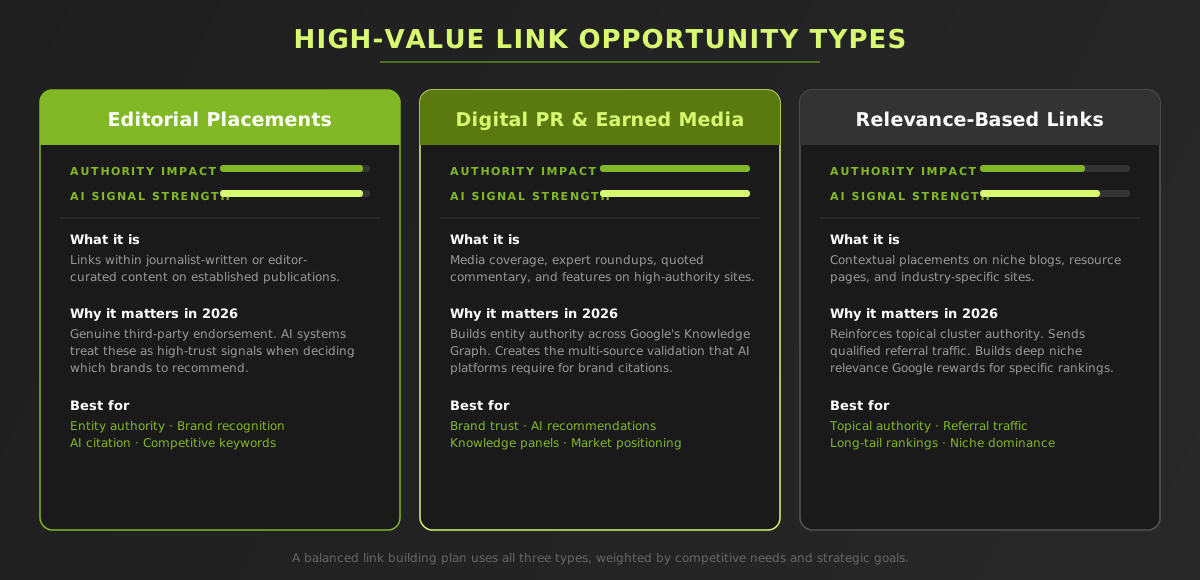
Editorial Targets
These are the publications, blogs, and industry sites that publish content relevant to your niche and accept contributed content or feature external brands in their coverage. Editorial links carry significant weight because they come from sites with established audiences and editorial standards.
Build a tiered list. Your top tier should include the most authoritative publications in your space, the ones with high DR, significant organic traffic, and strong brand recognition. Your second tier should include solid niche sites that might have lower overall authority but high topical relevance. Both tiers matter, because a diverse link profile from contextually relevant sources is more valuable than a handful of links from top-tier sites alone.
For brands that want to skip the prospecting phase entirely, a managed guest post service can provide pre-vetted editorial placements on real sites with genuine organic traffic.
Digital PR Opportunities
Digital PR extends beyond traditional link building into brand mentions, expert quotes, and media coverage. In 2026, these placements are especially valuable because they build the kind of third-party validation that AI systems rely on when deciding which brands to recommend.
Look for opportunities where your brand can contribute expert commentary on industry trends, provide data or research that journalists can cite, or participate in expert roundups and resource lists. The goal is to position your brand as a credible source that media outlets turn to when they need a quote or a reference.
Relevance-Based Placements
Some of the most effective links come from placements that might not have the highest DR but are deeply relevant to your specific niche. A link from a DR 40 site that serves your exact target audience can move the needle more than a link from a DR 80 site in an unrelated vertical.
Identify the blogs, resource pages, tools directories, and niche publications where your target customers actually spend time. A link insertion on an existing, high-traffic article in your niche can be one of the most efficient ways to build these contextually rich placements.
Crafting Your Link Building Plan
This is where strategy becomes execution. A good link building plan lays out what you’re going to do, when you’re going to do it, and what resources you need to make it happen.
Month-by-Month Roadmap
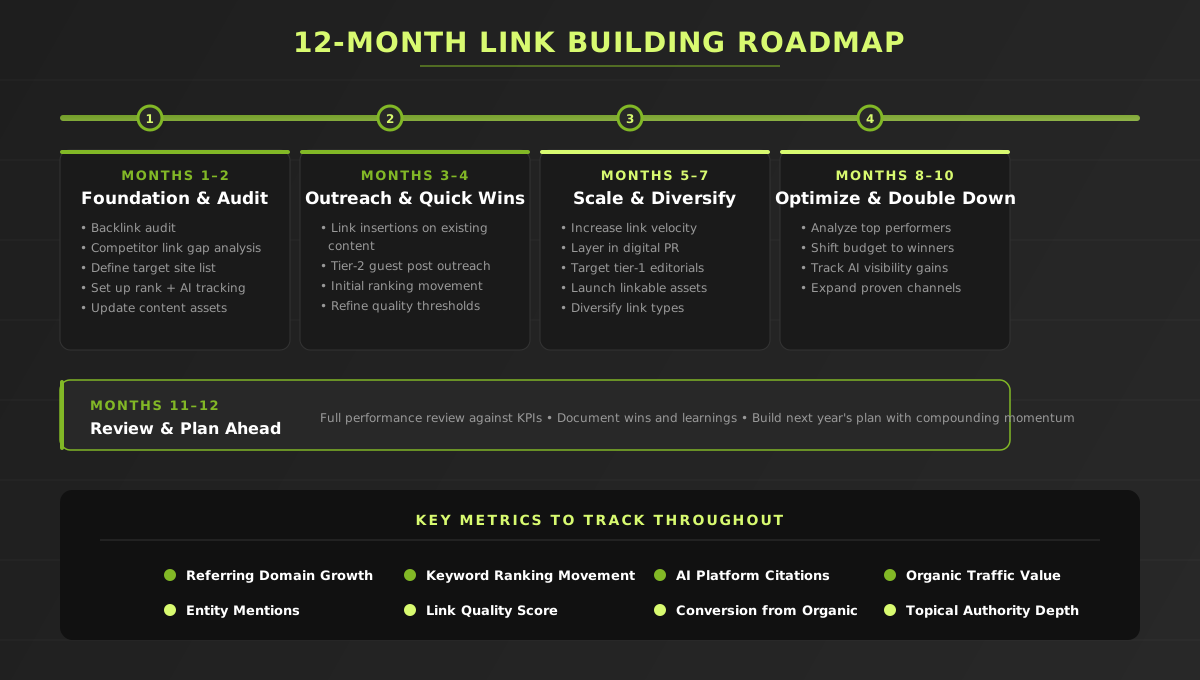
Break your plan into monthly phases. Here’s a framework that works for most businesses:
Months 1 through 2: Foundation and audit. Complete your backlink audit, competitor analysis, and link gap analysis. Define your target list. Set up tracking for rankings, referring domains, and AI visibility. Create or update the content assets you’ll use for outreach.
Months 3 through 4: Initial outreach and quick wins. Start with the opportunities that have the shortest path to results. This often means link insertions on existing content, where a relevant site already has a published piece that could naturally reference your brand or resource. Simultaneously begin outreach for guest post placements on your tier-two targets.
Months 5 through 7: Scale and diversify. Increase your monthly link velocity. Layer in digital PR efforts. Begin targeting tier-one editorial placements. Launch any linkable assets (research reports, tools, data studies) that require a longer production timeline.
Months 8 through 10: Optimize and double down. Analyze what’s working. Which link types are driving the most ranking improvement? Which referring domains are sending real traffic? Shift your resources toward the highest-performing channels and tactics.
Months 11 through 12: Review and plan ahead. Conduct a full review of your link building performance against the KPIs you set at the beginning. Document what worked, what didn’t, and what you’d change. Use these insights to build your plan for the following year.
Asset Creation Requirements
Your outreach is only as good as the assets you’re promoting. Before you start building links, make sure you have content worth linking to.
At minimum, you need a set of cornerstone pages that represent your best content on your most important topics. These should be comprehensive, well-designed, and genuinely useful to the audience you’re trying to reach. You may also need to create specific linkable assets like original research, industry surveys, free tools, or visual content that gives publishers a reason to reference your brand.
If your existing content isn’t strong enough to attract links, investing in professional SEO blog writing or SEO copywriting can close that gap before you start outreach.
Plan your asset creation timeline alongside your outreach timeline. There’s nothing worse than having a great placement opportunity and realizing you don’t have a page worth linking to.
Outreach Workflows
Systematize your outreach process so it’s repeatable and scalable. This includes email templates (that get personalized for each prospect), follow-up sequences, tracking spreadsheets or CRM entries for each outreach target, and clear ownership of who handles what.
The best outreach workflows combine personalization with efficiency. Every email should feel like it was written for the specific person receiving it, but your team shouldn’t be starting from scratch every time they draft a pitch.
The Role of Digital PR and Editorial Features
Link building and digital PR used to be treated as separate disciplines. In 2026, the line between them has almost disappeared.
Why Editorial Links Outperform Traditional Outreach
An editorial link is a link that appears within a piece of content written by a real journalist or editor, within the natural flow of their coverage. These links carry more weight than a self-placed guest post because they represent genuine third-party endorsement.
When a technology publication includes your brand in a roundup of the best tools in your category, that’s a signal to both Google and AI systems that your brand belongs in that conversation. When an industry journalist quotes your CEO in a piece about market trends, that builds entity authority in ways that traditional link building can’t replicate.
The Seer Interactive research backs this up: brands cited in AI Overviews receive 35% more organic clicks than non-cited brands on the same queries. Citation drives visibility, and editorial coverage is one of the most reliable ways to earn those citations.
How to Position Your Brand to Earn Coverage
Earning editorial coverage requires a different approach than pitching guest posts. You need to make your brand newsworthy and your team quotable.
Start by developing a media presence. This means having spokespeople who can comment on industry trends, maintaining a newsroom or press page on your site, and proactively sharing data, insights, or perspectives that journalists will find useful. Build relationships with reporters who cover your space. Respond to journalist queries on platforms like HARO, Qwoted, or Connectively. Share your expertise on social media in ways that establish your team as go-to sources.
For brands that need higher-tier media placements, a Press Authority or Earned Media campaign can secure coverage on sites that would be difficult to reach through cold outreach alone.
Over time, these efforts create a flywheel. The more coverage you earn, the easier it becomes to earn more, because journalists and editors start recognizing your brand as a credible source.
Creating SEO Assets That Attract Links
Not all content is created equal when it comes to earning links. Some content formats naturally attract more backlinks than others, and your link building plan should include a strategy for creating these high-value assets.
Research Pieces
Original data is one of the most powerful link magnets available to any brand. If you can conduct a survey, analyze a dataset, or publish proprietary research that reveals something new about your industry, you’ll create an asset that journalists, bloggers, and other content creators want to reference.
The key is specificity. A broad survey about “marketing trends” won’t stand out. A focused study about how AI search is changing click-through rates in the B2B SaaS space will get cited because it fills a gap in the existing conversation.
Tools and Calculators
Free tools earn links because they provide ongoing utility. If you can build a calculator, audit tool, or interactive resource that solves a real problem for your audience, you create something that other sites will link to as a resource for their own readers.
The tool doesn’t need to be complex. Some of the most linked-to tools on the web are simple calculators that take two or three inputs and produce a useful output. What matters is that it solves a problem your audience actually has.
High-Value Content Formats
Beyond research and tools, certain content formats tend to earn more links than standard blog posts. These include comprehensive guides (like this one), curated resource lists backed by genuine editorial judgment, case studies with specific data, and content that takes a strong, defensible position on a topic your industry cares about.
The common thread is that these formats provide value that’s hard to replicate. Anyone can write a 500-word blog post about link building. Very few brands will invest the time to create a detailed, data-backed guide that becomes the definitive resource on the topic.
Building Authority at Scale
Once your link building plan is working, the next challenge is scaling it without sacrificing quality. This is where most brands struggle, because the temptation is to increase volume by lowering standards. That’s a trap.
Systems and Processes
Scaling link building requires documented systems. Every step of your workflow, from prospect identification to outreach to placement verification, should be documented in a way that allows new team members to execute without losing quality.
Build a prospect database that tracks every target site, its contact information, your outreach history, and the outcome of each interaction. Use project management tools to track the status of every link in your pipeline. Set up automated alerts for new referring domains so you can verify placements in real time.
Team Structure
As you scale, you’ll need to decide whether to build an in-house team, work with an agency, or use a hybrid model. Each approach has tradeoffs.
An in-house team gives you maximum control but requires significant investment in hiring, training, and management. An agency brings established relationships and proven processes but requires careful vetting to ensure quality alignment. A hybrid model, where you handle strategy in-house and outsource execution to a trusted partner, often provides the best balance of control and efficiency.
For brands that want fully managed execution, ABC Plus delivers custom link building campaigns with built-in quality controls, or ABC Platinum for premium-tier placements that would be difficult to secure independently.
Whichever model you choose, make sure the people executing your link building plan understand your brand, your audience, and your quality standards. Links are a direct reflection of your brand’s reputation online.
Quality Control
This is non-negotiable at any scale. Every link placement should be reviewed against your quality thresholds before it counts toward your goals. Check that the linking page has real organic traffic. Verify that the content is editorially sound and contextually relevant. Confirm that the link is properly attributed and not buried in a way that diminishes its value.
Set up a monthly review process where you audit a sample of placements and evaluate them against your standards. This catches quality drift early, before it becomes a pattern.
Link Building Plan Mistakes to Avoid
Even well-intentioned link building plans can go sideways. Here are the most common mistakes we see, and how to avoid them.
Overreliance on Metrics
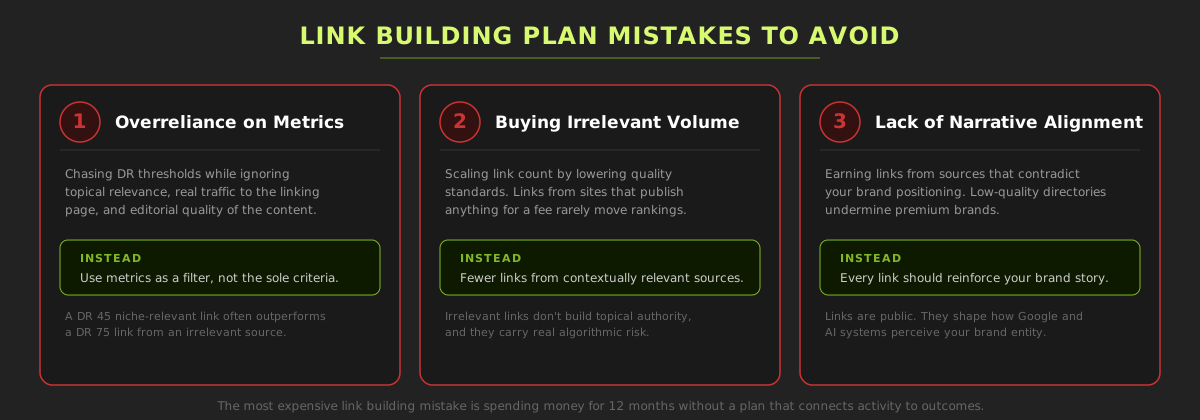
Domain rating is a useful indicator, but it’s not the whole picture. Some brands become so focused on hitting a DR threshold that they ignore everything else: topical relevance, traffic to the linking page, editorial quality, and the naturalness of the placement.
A DR 45 link from a highly relevant, well-trafficked niche site with genuine editorial standards will almost always outperform a DR 75 link from an irrelevant general-interest site that publishes dozens of sponsored posts per month. Use metrics as a filter, not as the sole decision-making criteria.
Buying Irrelevant Volume
The cheapest way to scale link building is to buy links from sites that will publish anything for a fee. This approach might show impressive numbers on a spreadsheet, but it rarely moves rankings in a meaningful way, and it carries real risk.
Search engines have become increasingly sophisticated at identifying paid link schemes and link farms. More importantly, irrelevant links don’t build the topical authority that modern search requires. If your links don’t come from contextually relevant sources, they’re not reinforcing the signals that matter.
Lack of Narrative Alignment
Your link building plan should tell a coherent story about your brand. The sites you get featured on, the content that earns you links, and the way your brand is described in external coverage should all align with how you want to be perceived in your market.
If you’re a premium SaaS brand, earning links from low-quality directories and coupon sites undermines your positioning. If you’re trying to build authority in a specific niche, links from unrelated verticals dilute your topical relevance. Every link should reinforce the narrative you’re building about who you are and why you matter.
Bringing It All Together
A link building plan isn’t a document you create once and file away. It’s a living strategy that evolves as your business grows, your competitive landscape shifts, and the search ecosystem continues to change.
The brands that win in 2026 and beyond aren’t the ones with the most links. They’re the ones with the most strategic links, placed on the right sites, reinforcing the right topics, and building the kind of genuine authority that both traditional search engines and AI systems recognize and reward.
Building that kind of authority takes time. It takes consistent effort. And it takes a plan that connects every link you build to a larger strategic objective.
If your current approach to link building feels scattered, reactive, or hard to measure, it’s time to build a real plan. Start with the foundation outlined in this guide. Audit where you are. Define where you want to go. Map the path between those two points. And then execute with the kind of consistency and quality that turns link building from a line item into a genuine competitive advantage.
The investment you make in a disciplined link building plan today will compound for years to come. If you’d like help building or executing that plan, book a strategy call with our team.
Frequently Asked Questions
What is a link building plan?
A link building plan is a documented strategy that outlines how a business will acquire backlinks to its website over a defined period of time. It includes an authority baseline audit, competitor analysis, target site lists, monthly execution milestones, content asset requirements, and measurable KPIs like ranking improvements, referring domain growth, and AI visibility.
How many links do I need per month?
The number of links you need depends on your competitive landscape, not a universal benchmark. Analyze the link velocity of the domains currently ranking for your target keywords, then build a plan that matches or exceeds that pace with higher-quality placements. For most businesses in moderately competitive niches, 10 to 30 quality links per month is a reasonable starting range.
How long does it take for link building to show results?
Most link building campaigns begin showing measurable ranking movement within three to six months. High-competition keywords may take longer. The key variable is link quality. A smaller number of editorially placed, topically relevant links from authoritative sites will typically outperform a larger volume of lower-quality placements on a shorter timeline.
What’s the difference between link building and digital PR?
Traditional link building focuses on acquiring hyperlinks from other websites to yours. Digital PR focuses on earning media coverage, brand mentions, and expert citations that build broader brand authority. In practice, the two disciplines overlap significantly in 2026 because editorial coverage and media mentions create the same third-party validation signals that both search engines and AI platforms use to evaluate brand credibility.
Does link building help with AI search visibility?
Yes. AI platforms like ChatGPT, Perplexity, and Gemini determine which brands to recommend based on the authority signals they encounter across the web. High-quality backlinks, consistent brand mentions from trusted publications, and editorial coverage all contribute to the pattern of validation that makes AI systems confident enough to surface your brand in their responses.
Should I build links to my homepage or inner pages?
Both, but with intention. Your homepage benefits from broad authority-building links that strengthen your overall domain. Inner pages, especially service pages and pillar content, benefit from topically relevant links that reinforce their specific subject matter. A balanced link building plan distributes link equity across your highest-priority pages based on your ranking goals and content strategy.