
AI models have rewritten the script for how link equity and authority signals impact brand visibility online.
Before AI search, the concept of ‘authority’ on search engines was mostly a proxy score built from backlinks. Domain-level metrics like DR or DA are essentially algorithmic ratings based on who links to you and how often.
LLMs don’t operate this way.
Instead of treating link graphs as the ultimate truth signal, AI search systems look for signals that reinforce real-world credibility.
These include things like positive mentions on reputable news sites and trusted industry round-ups (like getting mentioned in ‘Top 10 Fintech Tools’ appearing on a site like CNET).
Mathematical authority scores like DA and DR aren’t reliable indicators of whether a brand will surface in AI answers on platforms like ChatGPT or Google’s AI Overviews.
The real contrast is between algorithmic authority and genuine trustworthiness.
Since LLMs pay attention to the surrounding context behind each mention and backlink (including domain relevance), link placement, sentiment, and editorial quality are what matter most. The substance around the link matters more than the total number of links pointing at you.
Thus, establishing modern online authority involves building a pattern of credible mentions, citations, and validation from experts.
Because of this, the concept of building link equity has shifted from volume to selective endorsement.
In this post, we’ll explain which authority signals shape AI search answers the most, and how they shape the answers users actually see.
Here’s what we’ll analyze:
- Core authority signals for 2026
- How AI prioritizes real-world credibility
- Why link equity matters
- How to build strong authority signals in 2026
What are the Core Authority Signals for AI Search in 2026?
LLMs weigh a calculated series of trust signals to prove that your brand is a clear, verifiable, and well-regarded source.
In terms of authority, your backlinks and brand mentions must:
- Make sense in context. LLMs care more about the semantic context behind a link or mention than the raw URL and domain metrics. Mentions inside clear, on-topic explanations carry more weight than generic directory listings. Repeated mentions in topically-aligned content help LLMs associate your brand’s entity with queries related to your core topics.
- Carry a positive sentiment and framing. AI models pay attention to how your brand appears on other websites. In particular, they analyze the framing of each link/mention and the sentiment behind it. For instance, imagine a site links to one of your product pages in the body of the article (good framing) and vouches for its quality (positive sentiment). Conversely, if another site mentions your brand name alongside the text ‘avoid at all costs,’ the framing and sentiment will work against you.
- Reflect real human judgment. The value of a backlink or mention increases whenever it reflects real human judgment, such as appearing on a trusted news website. News sites feature editors and fact-checkers, and they have a legal obligation to report the truth, which is why news mentions yield premium authority signals.
Mentions and backlinks that embody these three characteristics are what really get the needle moving on AI search platforms.
There are three core types of authority endorsements that check all the boxes: quality backlinks, news mentions, and brand citations.
Quality backlinks
Backlinks are still the classic authority layer, even for AI answers.
As mentioned before, the bar has shifted from amassing raw link metrics to building genuine endorsements of trustworthiness.
The mechanism is the same (backlinks), it’s just the methodology that’s changed.
Here are the types of links you should target now:
- Source matters more than count. Reach out to recognized, topic-relevant websites that consistently produce high-quality content in your niche. Look for sources like industry publishers, niche blogs, universities, and major SaaS tools.
- Positive placement and context. LLMs actually know what words mean, so they’ll know if your link is authoritative or not from the context alone. In-body editorial backlinks are by far the most powerful, so you should target them the most.
- Topically-matched domains. Topical relevance plays a huge factor in the impact your backlinks have on your AI search visibility. LLMs analyze not only the surrounding text but also the topical relevance of the domains that link to you.
News mentions
News coverage provides premium authority signals to AI systems. News mentions demonstrate that your brand exists in ‘real-world’ discussions related to your niche.
Coverage in journalistic or analytical outlets serves as third-party verification of your brand’s credibility and relevance to core topics.
Contextual news stories like product launches, funding, and case studies feed AI models with concrete narratives to attach to your entity.
Brand citations (linked and unlinked)
A brand citation occurs whenever your brand name appears in other people’s content, whether there’s a hyperlink or not.
You can think of brand citations as an ambient reputation layer. Everywhere your name shows up and gets associated with a problem space, AI systems see another vote that you’re relevant and credible there.
For this reason, it’s crucial that your mentions remain focused on your area of expertise. Too many citations across unrelated topics will send fragmented signals to AIs. This can prevent your brand from becoming a recognizable, credible authority figure for your most important topics.
The most important characteristics of brand citations include:
- Frequency and distribution. The goal is to provide a dense layer of pattern recognition to AI models to ensure they categorize you in the right semantic neighborhoods. You achieve this by frequently getting mentioned across news posts, resource lists, comparison articles, reviews, and social posts that all relate to your core area of expertise.
- The surrounding language. This harkens back to how LLMs analyze the sentiment and framing behind each link and citation. Snippets like ‘we recommend,’ ‘we use,’ or ‘X is the standard for’ carry positive sentiment and framing. In the same vein, neutral name-drops don’t carry much weight since they don’t provide an opinion about your brand’s usefulness, quality, or leadership abilities.
- Co-mentions alongside related entities. Getting mentioned alongside other reputable entities in your field will cause AI models to cluster you close to them in their internal knowledge graphs. Try to appear alongside industry experts, popular tools, and frequently presented problems to further cement your brand as an authoritative entity in your field.
Since brand citations are a primary trust signal for AIs, it’s now crucial for brands to actively cultivate and nurture their online brand presence.
According to research from Ahrefs, brand mentions had some of the strongest correlations with visibility in Google’s AIOs.
Maintaining narrative consistency is key. Otherwise, AIs may infer false or irrelevant information about your brand on external websites.
Why Link Equity Still Matters in AI Search
Link equity as a concept has not vanished; it’s just viewed through a credibility lens instead of link metrics like DR.
Instead of PageRank-style ‘link juice’ flow from volume and quality, AI systems rely on relevant, editorially vetted sources.
As a result, one backlink on a credible, relevant news outlet (with positive framing) is far more equitable than dozens of generic, unrelated backlinks (even if they appear on high-DR sites).
Backlinks also assist with establishing entity confidence. The more backlinks you generate on relevant, authoritative websites, the more AI tools will include you in the same semantic neighborhoods.
Site owners must shift to building this new type of link equity if they want to earn consistent AI citations for queries related to their businesses.
Building Strong Authority Signals in 2026
Developing authority in 2026 requires proactive, layered link-building strategies that prioritize verifiable trust over quick wins.
While it takes significantly longer and requires more effort to build genuinely trustworthy backlinks, vast numbers aren’t required to make a strong impact.
Instead, consistency and quality should be your guiding winds.
Remember, you want your backlinks and mentions to densely cluster around topics related to your business.
That means carefully curated link placements will always beat mass-production strategies like tiered link-building or getting listed in thousands of low-quality directories.
Pursue coverage in niche trade publications, analyst reports, industry roundups, and news articles.
Here are some practical tips:
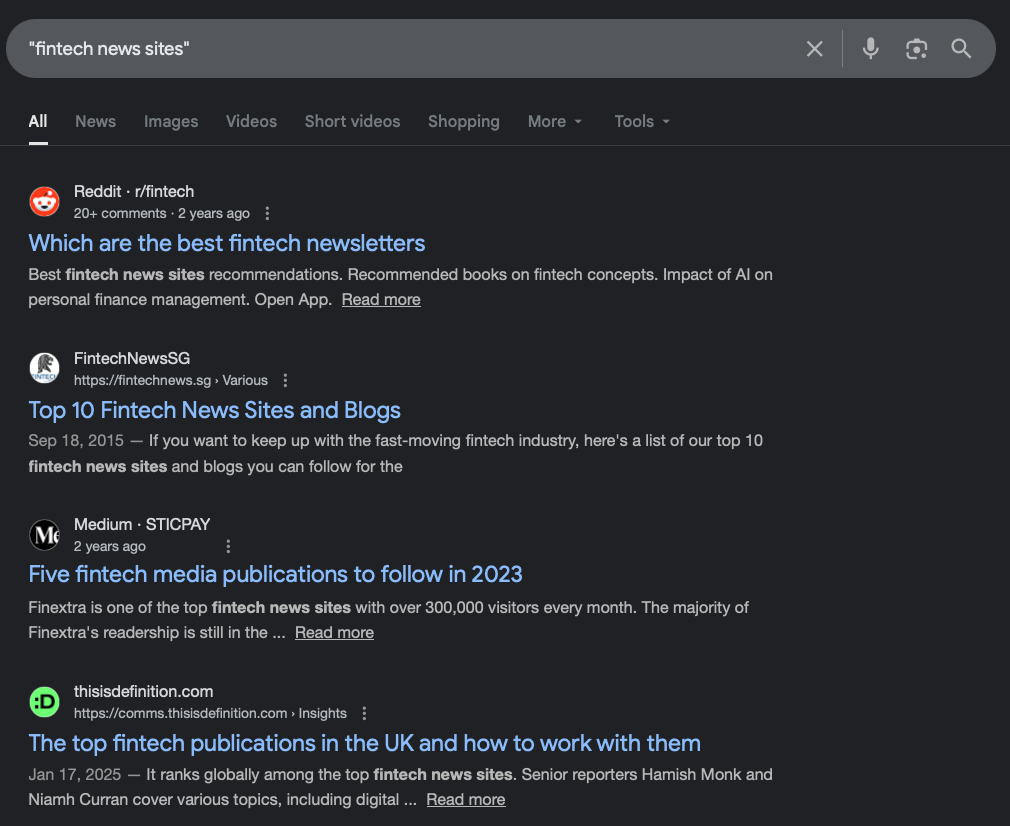
- Targeted Google searches like “(your industry) trade publication” and “(your industry news site)” can help you track down relevant websites to target for backlinks:
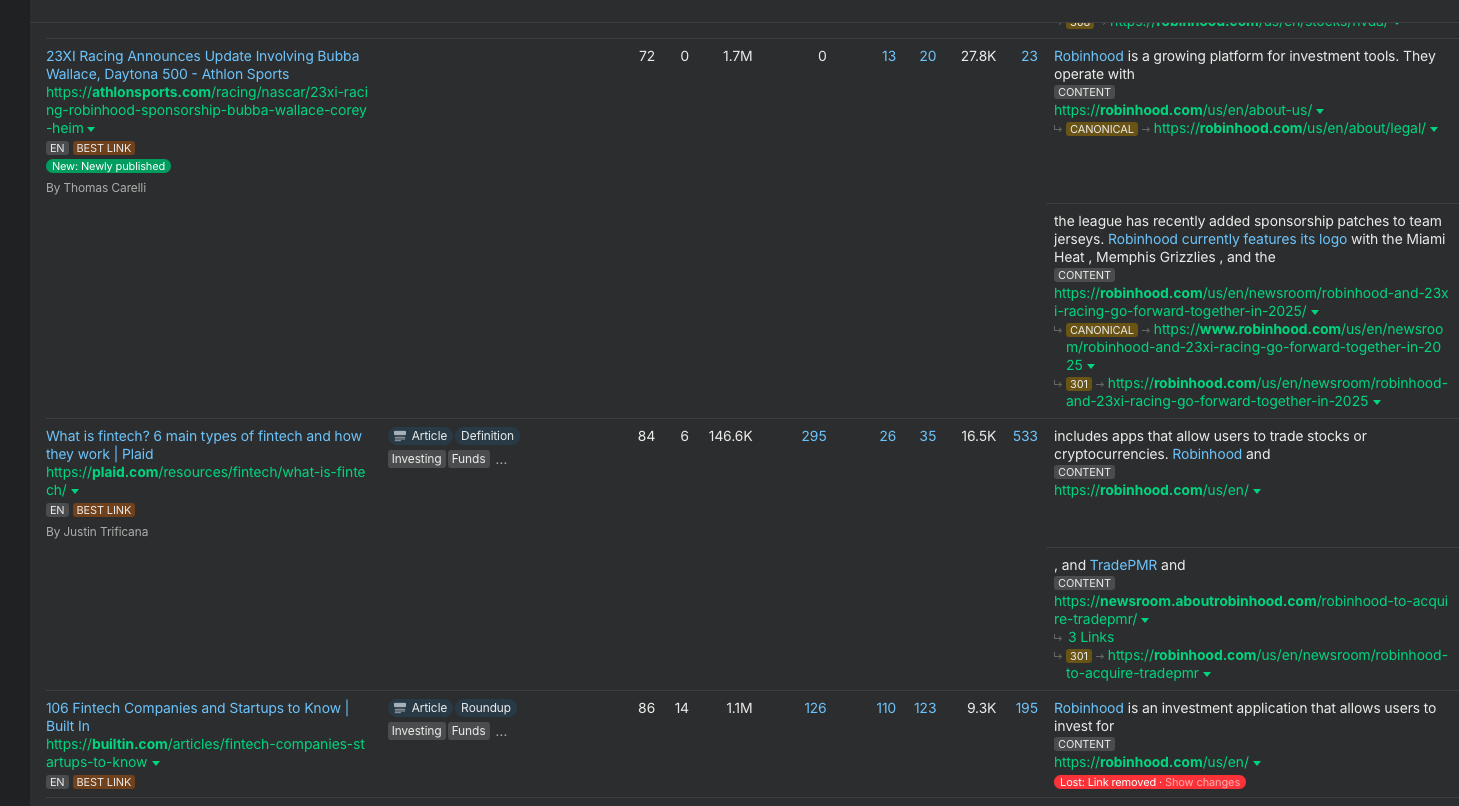
- You can also check competitors’ backlink profiles to find outlets that provide backlinks to sites in your industry:
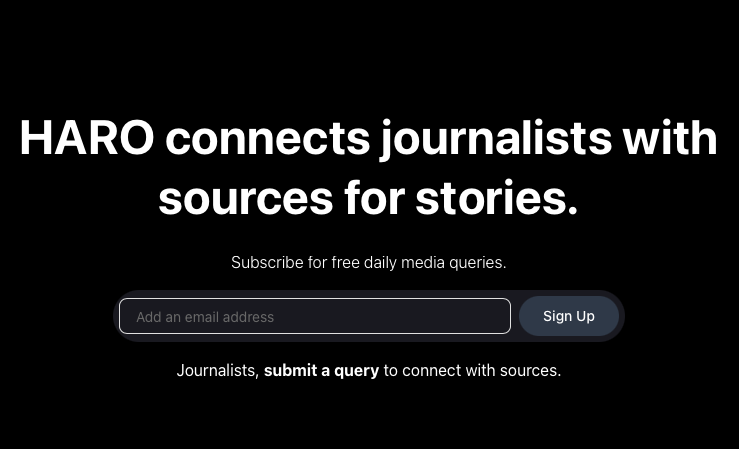
- Platforms like HARO and Qwoted are useful for networking with industry journalists, but competition is typically very high. Aim to respond to queries as quickly and professionally as possible:
Also, you need to add structured entity data to make your brand’s online presence machine-readable. This aids with entity recognition and ensures that AI models A) know who you are and B) connect you to the right topics.
Implement schema types like Organization, Person, and sameAs on your site, social profiles, Wikipedia (if possible), and on major directories. This provides consistent naming, logos, and descriptions.
Also, add Article, HowTo, and FAQPage schema to your content to reinforce your topical authority.
Wrapping Up: How Modern Authority Signals Shape Link Equity
To summarize, link equity has gone through a drastic transformation. In AI search, it still exists, but revolves around genuine endorsements of authority.
This requires the link-building process to become hyperfocused on securing quality link placements instead of building links en masse.
Is your brand in need of more AI citations and higher keyword rankings?
Check out ABC Platinum, our fully managed, elite-level link-building service.