
AI platforms like ChatGPT and Perplexity, while still on the newer side, have been around long enough for savvy marketers like us to figure out how they work behind-the-scenes.
We’ve been running tests and experiments on LLM-powered search tools for a long time now, and we’ve learned lots of interesting things about AI search optimization. In particular, we were able to pinpoint what actually works and what doesn’t in terms of improving visibility.
Our findings uncovered that certain tactics, like tiered link-building, are no longer worth the effort.
Others, like digital PR, are extremely effective at improving AI search visibility.
LLMs have different quality measures in place than search algorithms, and they value backlinks differently. Because of this, you’ll have to adjust your link-building strategy to remain competitive in your field.
In this guide, we’ll share our AI search playbook that we’ve compiled through diligent research and countless experiments.
Here’s what we’ll cover:
- Traditional link-building techniques that aren’t worth your time anymore
- Which classic tactics still yield great results
- How to prioritize your link-building for AI search
AI Search Optimization: 3 Link-Building Tactics That Continue to Work
To start, let’s examine a few link-building strategies that successfully made the transition to AI search.
In fact, these techniques align perfectly with what LLMs want to see in backlinks.
#1: Contextual, relevance-first link-building
Prioritizing context and relevance in link-building has been around long before LLMs and AI Overviews. It’s easy to forget that Google has been using semantic search since Hummingbird was introduced in 2013. Soon after, RankBrain and BERT added NLP and machine learning into the mix. As a result, Google’s algorithm has been devaluing irrelevant backlinks long before tools like ChatGPT came around.
However, context and relevance matter even more to LLMs. Due to their sophisticated language processing, they can infer the full meaning and context behind your backlinks.
This means your backlinks must be:
- Relevant in context. Your backlinks have to make sense and add value if you want them to build trust in your brand. As an obvious example, a backlink to an e-commerce site selling dog food is an acceptable backlink for a blog about dog diets, but it’s not appropriate for a tech news site. LLMs will check the text surrounding a backlink to ensure the context makes sense, so link placement also plays a big role.
- Positioned as helpful resources and recommendations. Your backlinks need to serve a purpose beyond trying to improve your search rankings. LLMs want to see that your links act as helpful resources (free tools, relevant products, informative guides) and brand recommendations (i.e., another website directly recommending your business). These build trust and aid with named entity recognition (NER).
Of course, we’ve already been doing this for years. The good news is that prioritizing relevance will pay off via better AI visibility, so this technique is still worth the investment.
#2: Branded mentions in high-authority content
If you were already engaging in digital PR campaigns before AI search, you’ll be in a position to thrive. That’s especially true if your efforts generated lots of brand mentions on authoritative websites. According to our research, brand mentions are one of the most important LLM visibility factors. Branded search volume and branded anchors also top the list.
In other words, building a buzz for your brand is one of the best ways to optimize for AI search.
AI tools like ChatGPT trust brands that appear frequently in trusted online publications. These include:
- High-authority editorial publishers (NYT, WSJ, Business Insider, Daily Mail)
- Major media outlets (GQ, The Sun, Wired)
- Niche-authority websites (contextually relevant blogs and news sites)
Earning mentions and backlinks on these types of websites will:
- Increase the likelihood that AI search tools will cite your content
- Help LLMs recognize your brand as a distinct entity that’s associated with your niche and target audience
These benefits make digital PR one of the most impactful link-building techniques, if not the most impactful, for improving AI visibility.
#3: A backlink profile that supports topical authority (and not just homepage authority)
SEO metrics like Domain Authority and Domain Rating are rendered obsolete in AI search optimization. Topical authority, on the other hand, reigns supreme. Once again, this all comes back to context and relevance.
In standard SEO, a higher DR score correlates with higher search rankings and elevated levels of trust. Also, because of the PageRank ‘link equity flow’ system, it was possible to pass ‘link juice’ from authoritative backlinks to other pages.
LLMs don’t follow the PageRank system, and they parse page-level content much deeper than search algorithms do. In other words, they actually read the content, which is why context and topical authority are so important.
Instead of trying to beef up your DR score to rank higher, an AI-focused link-building strategy should focus on topical relevance and clarity. Aim for things like:
- Contextual mentions in authoritative guides (with anchor text like ‘(brand x)’s product is perfect for this’)
- Helpful resources and guides (‘check out (your brand’s) guide to learn more’)
- Topically-aligned guest posts
- Getting listed in niche-relevant product roundups
2 Link-Building Techniques That No Longer Work (At Least Not Well)
Next, let’s look at some widely used link-building tactics that didn’t transition well to AI search.
These two strategies are no longer worth the effort they take to pull off, so you should leave them behind.
#1: Building 100+ low-DR links for ‘link velocity’
To LLMs, one branded mention on an authoritative website is worth more than hundreds of low-DR backlinks. That’s especially true if the low-DR links come from irrelevant or untrusted domains.
On Google, building lots of low or average-quality links can eventually positively impact rankings. This is the whole idea behind tiered link-building, which is also something that doesn’t help improve AI search. If you want to get cited by more AI tools, then you have to think in terms of quality and relevance instead of quantity.
#2: Over-optimized anchor text across unrelated domains
Using keyword-rich anchor text can provide (marginal) ranking boosts on traditional search engines, but its effect is rendered moot on LLMs.
Anchor text tells search engine algorithms what the linked page is about, and including key phrases can push a page up in the rankings if done correctly.
At the same time, Google’s algorithm became pretty adept at catching anchor text spam, causing the need for a balanced anchor text ratio. Still, using keyword-rich anchor text could be used to improve search rankings, even across unrelated domains.
Since LLMs are far more robust with their language processing, they don’t fall for this trick. They will devalue signals coming from links that they think are manipulative or unnatural, so it’s not worth playing the anchor text game.
How to Prioritize Links for AI-Influenced Search
Lastly, here are some tips for adapting your link-building strategy to include AI.
While we’ve covered the types of links that you need already, we haven’t covered ways to actually build them, so let’s change that.
Find topically-aligned websites
First, you need to discover some semantically-aligned publishers in your niche. These are websites that LLMs will identify as related to yours, and you can find them using SEO tools like Ahrefs and Semrush.
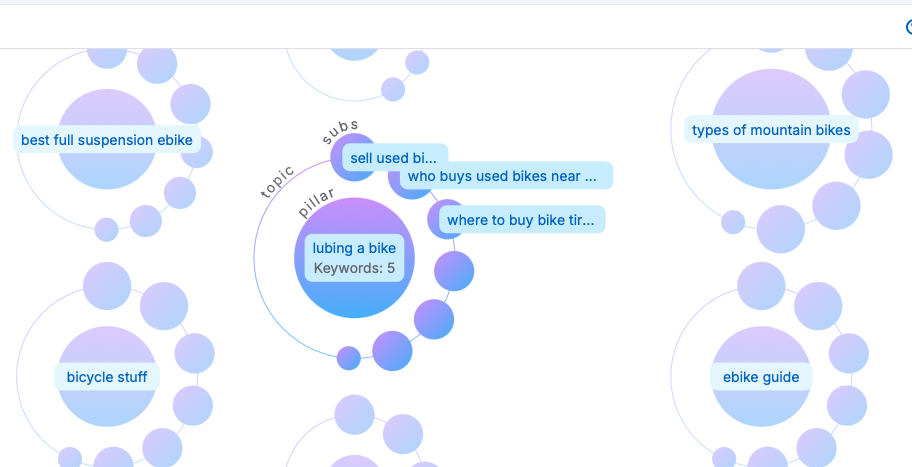
Start by looking up common keyword clusters in your niche, and then check the domains that consistently rank for them.
Semrush’s Keyword Strategy Builder is excellent for uncovering keyword clusters:
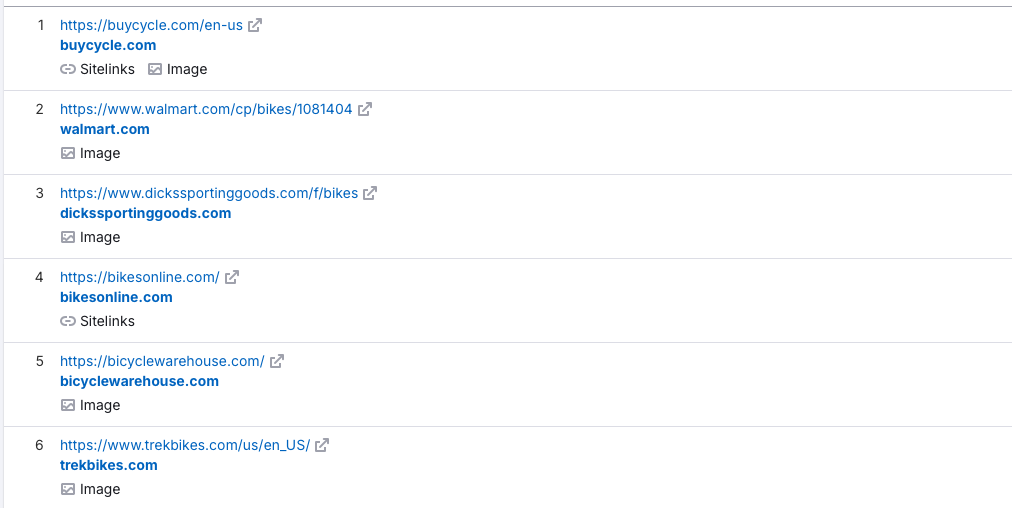
From there, check the rankings and identify common websites (i.e., the websites that consistently appear):
Ensure source credibility
In standard SEO, vetting domain quality for backlink targeting is pretty darn easy. All you have to do is check their DA and DR score, and you’ll know whether pursuing a link is worth the trouble or not.
Ensuring domain credibility on LLM-powered search tools isn’t as straightforward.
As of right now, there’s no magic score you can check to see if a domain will help improve your AI visibility.
What you can do is:
- Check the website’s topical alignment. Remember, LLMs prefer domains that have established topical authority. That means a link coming from a blog that’s 90% about gardening will carry more clout than a high-DA lifestyle blog that occasionally contains gardening advice.
- Examine their citations. You have to think like an LLM when vetting domains, so you should look up their citations and brand mentions online. Are they consistently referenced by authoritative articles, research, or news?
- Evaluate authorship expertise. LLMs also value author credibility, so you should, too. Look for detailed author bios, credentials, awards, and links to social media accounts (especially LinkedIn).
Placement relevance
Since context matters so much in AI-powered search, the placement of your backlinks is incredibly important.
Randomly placed backlinks won’t improve your visibility, so ensure each link is contextually relevant and uses honest anchor text. While it’s a good rule of thumb to include branded anchors whenever possible, there’s no need to spam exact-match keywords.
Instead, give an honest preview of the link’s destination.
Ready to Master AI Search Optimization?
It’s imperative for brands to adapt to AI-driven search as soon as possible. AI Overviews are everywhere you look on Google, and more users are incorporating AI tools into their online search and shopping experiences.
If you want to thrive with AI search and traditional SEO simultaneously, check out ABC Plus (managed link-building) and Digital PR Plus (perfect for improving AI visibility).