
Digital PR for Link Building: How Earned Media Builds Rankings and AI Citations
Corey Batt
If you’ve been building links for any amount of time, you’ve probably noticed that not all backlinks are created equal. A link from a DR 30 niche blog and a link from a DR 75 news publication both count as “one backlink,” but their impact on your rankings couldn’t be more different.
Digital PR is how you earn the second kind at scale.
It’s the practice of using newsworthy content, original data, and expert commentary to earn editorial coverage and backlinks from legitimate publications. Not by paying for placement on someone’s blog, but by giving journalists and editors something genuinely worth covering.
The result? Backlinks that carry significantly more authority than what most other link building tactics can deliver, plus brand mentions that build the exact trust signals AI platforms look for when deciding which brands to cite.
If you’re already running a link building plan and wondering whether digital PR should be part of it, or trying to figure out where it fits alongside guest posts and link insertions, this guide will help you make that call.
What Digital PR Is (and What It Isn’t)
Digital PR is a link building strategy that earns backlinks through editorial coverage in real publications. It sits at the intersection of traditional public relations and SEO, using the storytelling and media relationships of PR with the measurable, link-focused outcomes of search marketing.
Here’s what a typical digital PR campaign involves:
- Creating a newsworthy angle (original research, a data study, expert commentary on a trending topic, or a creative campaign)
- Pitching it to journalists, editors, and publications who cover that space
- When they run the story, they link back to your site as the source
You earn a high-authority backlink, a brand mention in a credible outlet, and often referral traffic from the publication’s audience. It’s a win across the board.
Now, let’s be clear about what digital PR isn’t:
- It’s not paying a blogger to insert a link into an existing post
- It’s not writing a guest article for someone else’s site
- It’s not buying placements on a directory
Those are all legitimate tactics with their own use cases (more on that below), but they aren’t digital PR. The distinction matters because the links you earn through digital PR tend to come from publications with significantly higher domain authority, and they carry editorial weight that search engines and AI systems treat differently than placed links.
Earned media coverage is the foundation of digital PR. You don’t control where the link appears or exactly how the journalist frames the story. That lack of control is actually what makes the links so valuable. They’re genuine editorial endorsements, not paid placements, and both Google and AI platforms treat them accordingly.
Why Digital PR Earns Stronger Links
The authority gap between digital PR links and links from other tactics isn’t a small difference. It’s substantial enough to change how fast your rankings move.
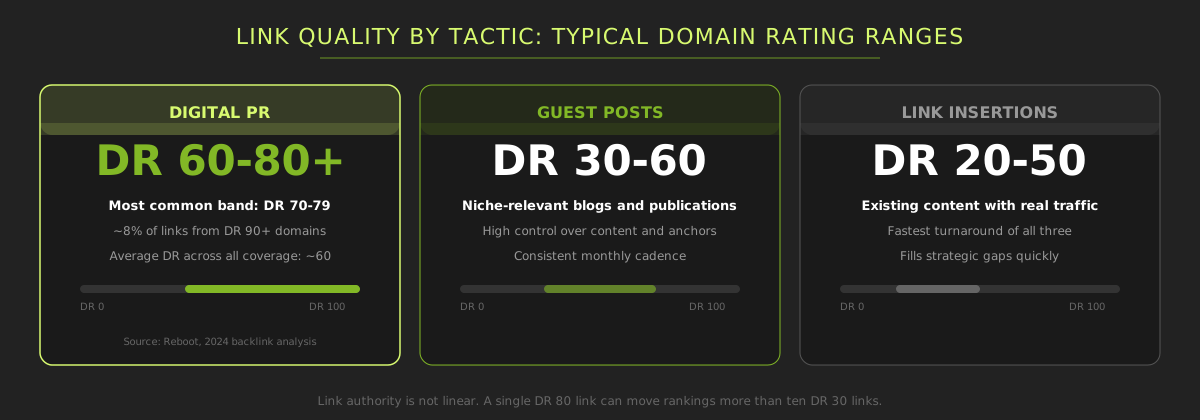
Reboot’s analysis of digital PR backlink data from 2024 found some impressive numbers:
- The most common domain rating band for digital PR links was DR 70-79, accounting for more than 20% of all links earned
- Nearly 8% of digital PR backlinks came from domains with a DR of 90 or above
- The average DR across all digital PR coverage was approximately 60
That’s considerably higher than the typical range for guest posts or niche edits.
Why does this matter so much? Because link authority isn’t linear. A single link from a DR 80 publication can move your rankings more than ten links from DR 30 sites. When you look at the cost per unit of ranking impact rather than cost per link, digital PR often delivers better value than it appears on the surface, especially for competitive keywords where you need high-authority signals to break through.
Reboot’s research also found that digital PR is now the most commonly used link building tactic among SEO professionals, with 16% naming it as their primary method. One in five specialists cited it as their most successful strategy. That shift reflects a broader industry recognition that link quality, not just quantity, is what drives results in 2026.
Digital PR vs Guest Posts vs Link Insertions
Digital PR isn’t the right choice for every situation. Understanding when to use each tactic is what separates a good strategy from wasted budget.
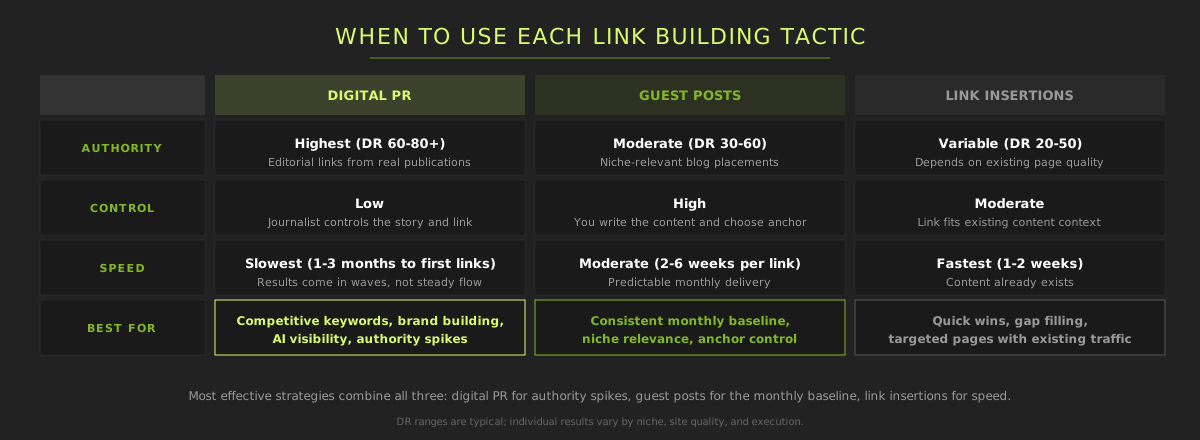
Let’s break them down.
Digital PR works best when:
- You need high-authority links from publications you couldn’t access through outreach alone
- You want brand mentions in credible media that build entity recognition
- You’re competing for keywords where the top results all have strong backlink profiles
The tradeoff? You have less control over placement timing and exact anchor text, and results tend to come in waves rather than on a predictable monthly schedule.
Guest posts work best when:
- You need consistent, predictable link building on a monthly cadence
- You want control over the content and anchor text
- You’re targeting niche-relevant blogs in a specific vertical
The authority range is typically lower than digital PR (DR 30-60 for quality placements), but the consistency and control make guest posts the backbone of most link building campaigns.
Link insertions work best when:
- Speed matters
- You’ve identified specific pages with existing traffic and relevance where a contextual link would fit naturally
- You need to fill gaps in your backlink profile quickly
Turnaround is usually faster than either digital PR or guest posts since the content already exists.
Here’s the thing: most effective strategies use a combination of all three. A managed link building program can coordinate these tactics into a unified campaign where digital PR delivers the high-authority spikes, guest posts provide the consistent monthly baseline, and link insertions fill strategic gaps. The ratio depends on your competitive landscape, budget, and how quickly you need to move.
How Digital PR Builds AI Visibility
This is the part of digital PR that most guides miss entirely: earned media coverage doesn’t just build backlinks. It builds the brand signals that AI platforms need to see before they’ll recommend you.
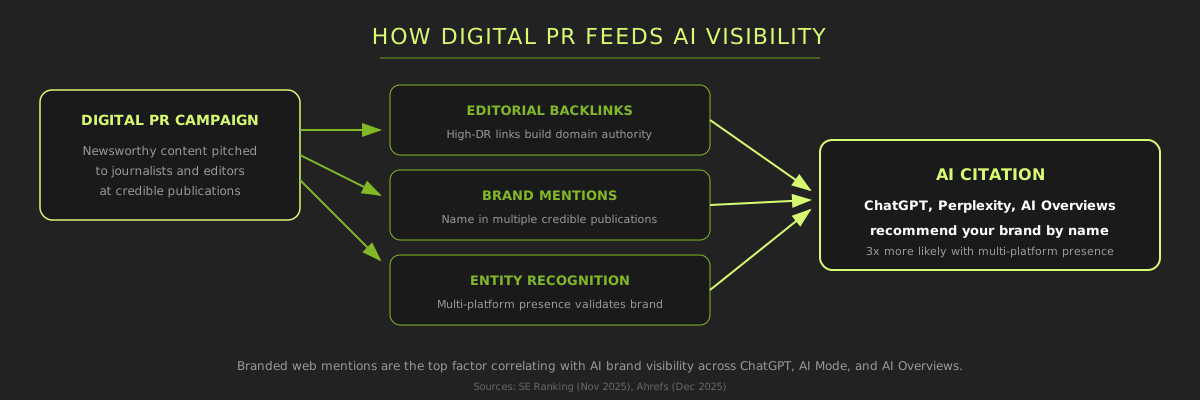
When ChatGPT, Perplexity, or Google’s AI Overviews generate an answer that names specific brands, they’re drawing on patterns of trust they’ve observed across the web. The brands that get cited are the ones that:
- Appear consistently in credible editorial contexts
- Are mentioned by name across multiple authoritative sources
- Have validation signals on third-party platforms
SE Ranking’s November 2025 research found that domains with profiles on platforms like Trustpilot, G2, and Capterra have roughly 3x the likelihood of being cited by ChatGPT compared to sites without that presence. Digital PR naturally creates this kind of multi-platform brand validation because earned coverage spreads your brand name across publications, review sites pick up on brands that are getting press, and the overall pattern of third-party mentions grows.
Ahrefs’ December 2025 analysis confirmed that YouTube mentions and branded web mentions are the top factors correlating with AI brand visibility across ChatGPT, AI Mode, and AI Overviews.
In other words, the brands that AI recommends are the ones that show up everywhere, not just the ones with the most backlinks. Digital PR is one of the most effective ways to create that “everywhere” presence because a single successful campaign can generate coverage across multiple outlets simultaneously.
If you want to understand how AI visibility fits into your broader marketing strategy, our AEO guide covers the full picture of how answer engine optimization works, including budget allocation and team workflows.
What Digital PR Results Actually Look Like
One of the biggest mistakes we see brands make with digital PR is expecting the wrong results on the wrong timeline. Setting realistic expectations upfront is the difference between a strategy that compounds and one that gets abandoned too early.
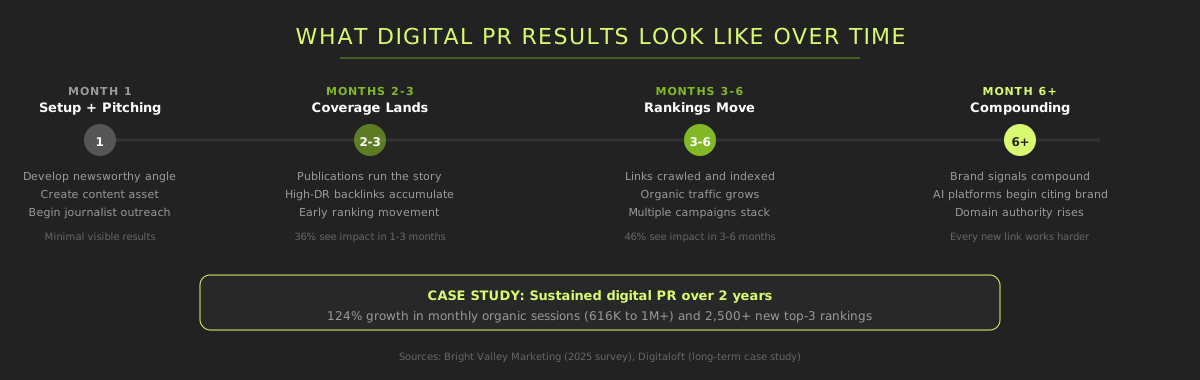
A survey by Bright Valley Marketing found that:
- 46% of PR professionals believe a digital PR campaign takes 3-6 months to show measurable results
- 36% said you can see initial impact in 1-3 months
- Top-performing campaigns can generate 40+ backlinks from a single effort
Here’s what a realistic progression looks like:
Month 1 is mostly setup and pitching. Your team develops the newsworthy angle, creates the content asset (data study, survey results, expert roundup), and begins outreach to journalists and editors. Visible results at this stage are minimal.
Months 2-3 is when coverage starts landing. Individual publications run the story, and you begin accumulating high-authority backlinks. You may see some early ranking movement on target keywords, but the big gains haven’t arrived yet.
Months 3-6 is where the compounding starts. The backlinks that landed in months 2 and 3 have had time to be crawled, indexed, and factored into ranking algorithms. Organic traffic to the pages those links point to begins growing. If multiple campaigns are running in parallel, the effects stack.
Month 6 and beyond is where digital PR really separates itself from other tactics. The brand mentions and editorial coverage you earned earlier are now part of the web’s permanent record. AI platforms have had time to encounter your brand across multiple credible sources and begin recommending it. Your domain authority has increased, which means every subsequent link has a stronger foundation to build on.
Digitaloft published a detailed case study tracking the long-term impact of sustained digital PR over two years. The result? 124% growth in monthly organic sessions (from 616,000 to over one million) alongside a gain of more than 2,500 new top-three rankings.
That kind of growth doesn’t happen from link building alone. It happens when high-authority links combine with brand signals, entity recognition, and the compounding effect of a domain that search engines and AI systems have learned to trust.
It’s also worth noting that 72% of PR professionals say digital PR is harder to execute in 2025 than it was in 2024, according to Bright Valley’s research. Journalists are more selective, competition for coverage is higher, and the bar for what counts as “newsworthy” has risen.
This isn’t a reason to avoid digital PR. It’s a reason to either invest in doing it well or work with a team that has the media relationships and creative capacity to break through.
How to Evaluate If Digital PR Is Working
Link count alone is a poor measure of digital PR success. Here’s what you should actually be tracking: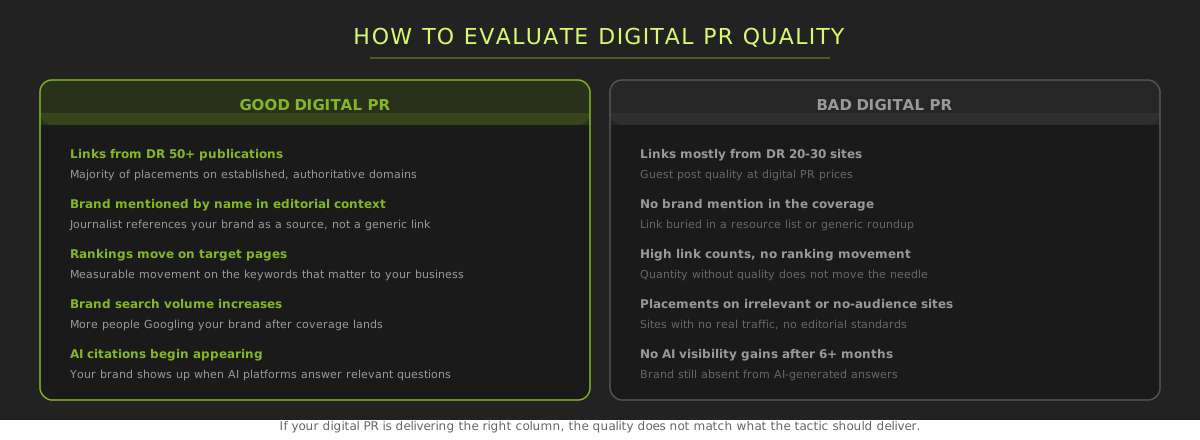
- Referring domain authority distribution. Look at the DR of the sites linking to you from PR campaigns. If the majority are DR 50+, the campaign is delivering. If most links are coming from DR 20-30 sites, you’re getting guest post quality at digital PR prices.
- Brand mention context. Are the publications mentioning your brand by name in an editorial context, or is the link buried in a generic resource list? Editorial brand mentions carry significantly more weight for both rankings and AI visibility.
- Ranking movement on target pages. Track the specific pages your PR links point to. Are they moving up? If links are landing but rankings aren’t moving, the issue may be with the target page itself (content quality, technical issues) rather than the links.
- Brand search volume. Monitor whether branded searches increase after coverage lands. A spike in people Googling your brand name after a media feature is a direct signal that the PR is building awareness, and brand search volume is itself a ranking factor.
- AI citation tracking. Periodically query ChatGPT, Perplexity, and Google AI Overviews with questions relevant to your business and check whether your brand appears. An AI Plus monitoring setup can automate this tracking across platforms.
What bad digital PR looks like: Be cautious of agencies or campaigns that deliver high link counts from low-authority sites, placements on sites with no real audience, coverage that doesn’t mention your brand by name, or links on sites with no topical relevance. These are signs that the “digital PR” being delivered is actually low-quality link building dressed up in PR language.
Getting Started
If you’re considering adding digital PR to your link building strategy, here’s how to think about it.
First, assess your competitive landscape. Look at the backlink profiles of the sites ranking in the top three for your most important keywords. If they have links from major publications, industry outlets, and news sites that you don’t, digital PR is likely the fastest way to close that gap.
Second, make sure your foundational link building is already in place. Digital PR works best as an accelerant on top of a consistent monthly link building program, not as a replacement for it. The high-authority spikes from PR campaigns have the biggest impact when they’re supported by a steady base of relevant guest posts and strategic insertions.
Third, consider your resources. If you don’t have the in-house capacity to develop newsworthy content, manage journalist relationships, and execute pitching at scale, working with a team that specializes in press and media authority placements can get campaigns off the ground faster. Keeping a content refresh cadence on the pages your PR links point to also ensures those pages stay competitive long after the coverage lands.
Ready to add digital PR to your link building strategy?
Don’t wait to book a strategy call with our team, and we’ll walk through where it fits for your specific situation.
Frequently Asked Questions
What is digital PR in link building?
Digital PR is a link building tactic that earns backlinks through editorial coverage in legitimate publications. Instead of paying for a guest post or requesting a link insertion, you create newsworthy content and pitch it to journalists who cover the story and link back to your site as the source. The links tend to come from higher-authority domains than other link building methods.
Is digital PR better than guest posting?
They serve different purposes. Digital PR earns higher-authority links (typically DR 60-80+) but with less control over timing and anchor text. Guest posts provide consistent, predictable link building (typically DR 30-60) with more control over content and placement. Most effective strategies use both, with digital PR providing authority spikes and guest posts providing the monthly baseline.
How long does digital PR take to show SEO results?
Most campaigns begin generating coverage and links within one to three months. Measurable ranking and traffic improvements typically appear within three to six months as the links are crawled, indexed, and factored into algorithms. The full compounding effect, including AI citation gains, usually becomes visible after six months of sustained effort.
Does digital PR help with AI search visibility?
Yes. Digital PR creates the exact pattern of signals that AI platforms use to decide which brands to recommend: editorial brand mentions across multiple credible sources, high-authority backlinks that signal domain trust, and multi-platform presence that builds entity recognition. Research shows that branded web mentions are among the top factors correlating with AI brand visibility across ChatGPT, AI Overviews, and AI Mode.
How much does digital PR cost?
Costs vary widely depending on scope and execution quality. Industry data suggests most companies investing in digital marketing spend between $2,500 and $12,000 per month, with digital PR typically at the higher end due to the content creation, journalist outreach, and creative development involved. The cost per link is higher than guest posts, but the cost per unit of ranking impact is often lower because each link carries more authority.
How do I know if my digital PR agency is delivering good results?
Look at the domain rating of sites where coverage lands (most should be DR 50+), whether your brand is mentioned by name in the editorial content, whether rankings are moving on the pages links point to, and whether brand search volume increases after campaigns. If you’re getting high link counts but from low-authority or irrelevant sites, the quality doesn’t match what digital PR should deliver.